
New dashboards, workflow integrations, and AI triage for high-velocity teams
AI-assisted development increased shipping speed. For many teams, testing and triage have become the constraint.
Checksum is pushing quality deeper into the software development life cycle so issues are caught earlier, routed automatically, and resolved faster. These updates reduce noise, tighten feedback loops, and keep the system of record aligned with how engineering teams already work.
With the latest features, Checksum now gives engineering teams a clearer health signal, pushes findings into existing workflows, and speeds up failure diagnosis so teams can move faster without trading off quality.
What’s new
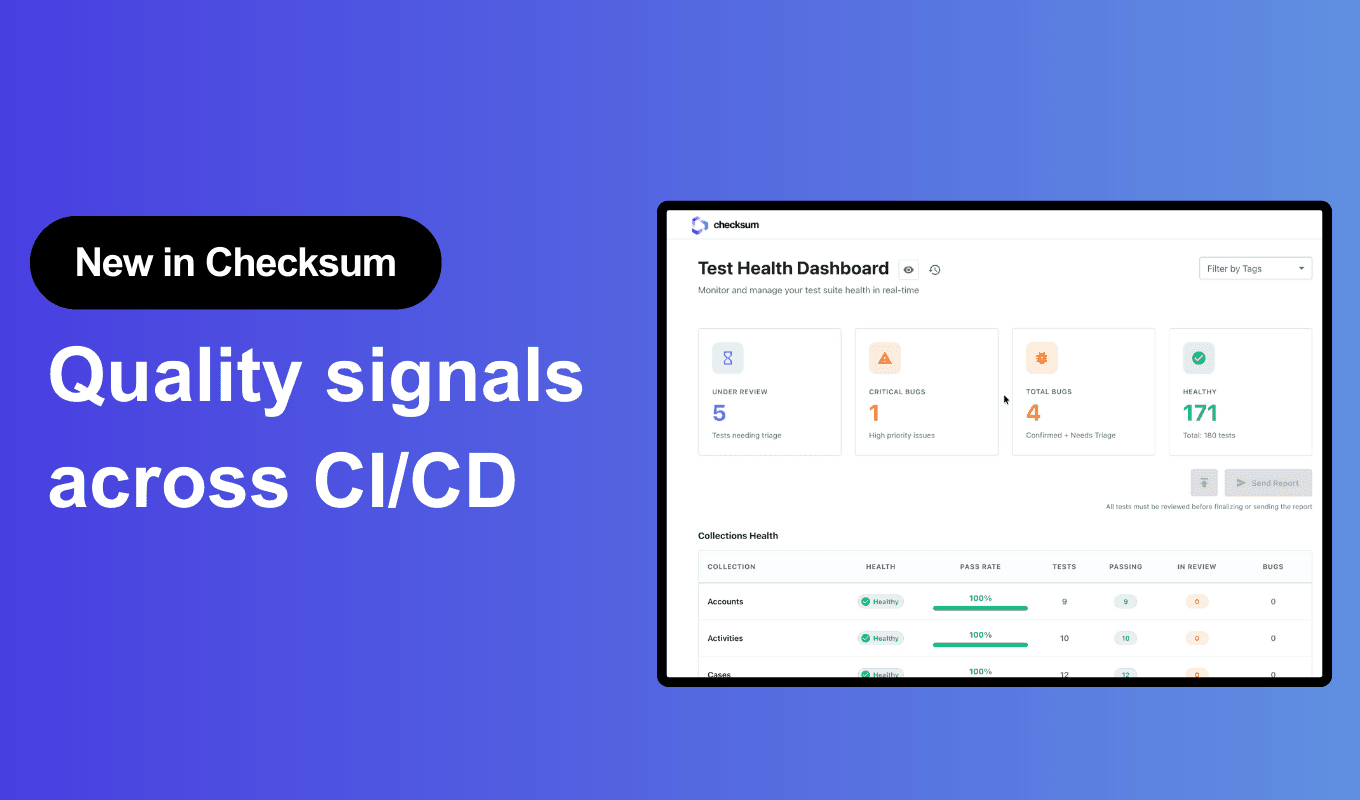
Feature Health Dashboard (a health check snapshot of your system)

A single nightly snapshot that shows what’s healthy, what’s failing, and what’s actually a bug.
The Feature Health Dashboard gives teams one place to see what’s green, what’s not, and what’s actually a bug.
It provides a snapshot of feature test coverage and status (pass/fail, critical vs non-critical), along with known bugs and how long they’ve been failing. Instead of staring at a wall of red and wondering what matters, teams can quickly identify real issues and prioritize action.
Built for faster triage and cleaner handoffs, the dashboard lets teams review failures with supporting context (screenshots, videos, Playwright details) and decide what to do next. It also syncs bugs with internal tracking systems like Jira, ClickUp, Linear, and more.
Teams can also get a daily Slack update with the latest snapshot, including new and existing bugs, test passes, failures, and recoveries.
Why it helps teams move faster
Less time sorting signal from noise
Faster decisions on “ship vs hold” and “fix now vs later”
Kick off and monitor tests through the UI (tighten the feedback loop)

Kick off runs instantly, monitor results, and get updates where your team works.
Teams can now trigger runs from inside Checksum. Run a full collection or an individual test on demand, then monitor and review job results as they complete.
Review results in the dashboard, or get updates through webhooks in your favorite workflow.
Webhooks and notifications (get alerts where you need them)
Key email notifications ensure you never miss important updates like test generation completion, bug detections, or bug updates. Webhooks fire on key moments (generation, failures, healing, discoveries) so teams can automate routing and notifications.
A common workflow: when a bug is confirmed, create or update a Jira ticket automatically so engineers can pick it up immediately. Webhooks also work with Slack and other destinations, so the right people see the right signal quickly.
Why it helps teams move faster
Engineers can validate fixes immediately without waiting for the next scheduled run
Findings get routed automatically, which cuts coordination time
Ticketing system integration (Jira, ClickUp, Linear, and more)
Checksum pushes discoveries into the ticketing tools your team already uses, so quality signal becomes actionable work, not another dashboard someone has to remember to check.
When a failure is confirmed as a real bug, you can automatically create or update an issue in Jira, ClickUp, Linear, and more. The ticket includes the evidence engineers need to move quickly (screenshots, videos, Playwright details), plus links back to the exact run and failure context. That makes handoffs cleaner between QA and engineering, and it reduces the “what should I do with this failure?” loop.
Why it helps teams move faster
Fewer mismatches, fewer “wait, which version is real?” moments
Faster collaboration between QA and engineering because issues link cleanly to code and tickets
Bringing it all together
With these updates, Checksum becomes a clearer system of record for quality: a daily health snapshot and on-demand validation from the UI, automated routing into Jira and Slack all while keeping Git as the source of truth.
The result is a shorter path from change to trusted signal to shipped code.
What this changes for engineering leaders
Release decisions get simpler. You can see real risk quickly, without forcing the team to wade through noisy runs.
Quality becomes an always-on workflow. Discoveries route automatically into Jira/Slack, reducing coordination overhead and drift.
Velocity scales without the quality tax. Faster diagnosis and cleaner handoffs keep QA from becoming the bottleneck as shipping speed increases.

Maysam Sadeghi is Head of Customer Engineering at Checksum, an AI first company tackling the largest problems builders are facing in the world of AI coding: Quality of the output. Checksum agents detect, generate and heal End-to-end Playwright tests, auto detect and run unit and integration tests in PRs, and monitor APIs end points around the clock, all part of an ecosystem ensuring quality across the full Software Development Lifecycle.