
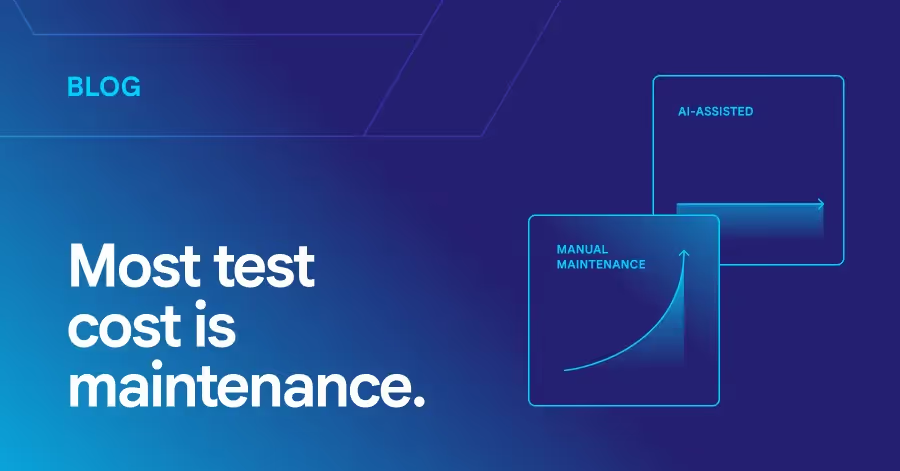
Test automation is sold on efficiency: write the test once, run it forever. The reality is different. Tests break constantly, and someone has to fix them.
Most engineering managers estimate their team spends "a few hours a week" on test maintenance. When you instrument the actual time, the numbers are consistently higher. The cost is fragmented across debugging sessions, CI wait times, and context switches that never make it onto a roadmap or incident report.
Where the time actually goes
Not all failures cost the same to fix. From our analysis of real production test runs, failures fall into four buckets: selector changes, flow changes, environment instability, and loading and timing issues. Flow changes are the most expensive, often requiring coordination across multiple files and teams. Selector changes are the most common.
When you account for fix time, CI overhead, and context switching, the all-in cost per failure for human-only maintenance adds up faster than most teams expect. A 500-test suite can easily translate to seven figures annually in maintenance time alone.
What changes with AI-assisted maintenance
The economics shift significantly when AI handles the routine repairs. In our benchmark data, 70% of failures resolve autonomously with no human involvement. The remaining 30% become quick reviews rather than deep investigations. Failure rates themselves drop by 82% compared to manual maintenance.
The result is a 94% reduction in human time per failure, and maintenance costs that go from a hidden tax on your best engineers to a manageable, predictable line item.
The secondary costs most models miss
Direct fix time is only part of the picture. Blocked releases, context switching, and trust erosion compound the cost in ways that are harder to quantify but very real. Once engineers learn to ignore red builds, real bugs start slipping through.
For the full cost model, suite-size breakdowns, and a calculator you can use with your own numbers, download the 2026 QA Benchmark report here.