
Do more with your team than maintain what's already broken.
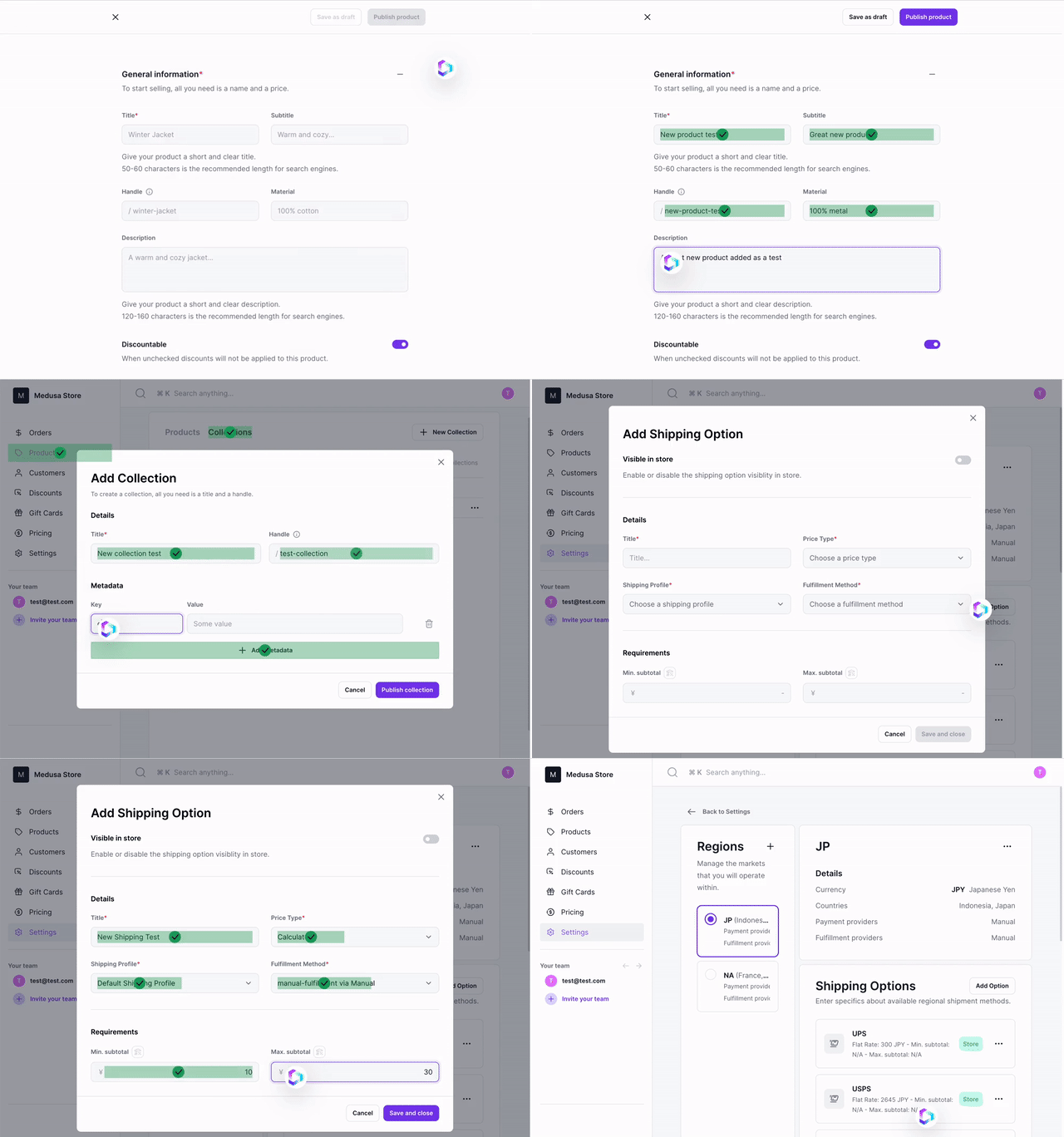
Your suite is red more than it's green.
Coverage is growing faster than your team can keep up with. AI coding tools are shipping more features, more often. Manual test cycles do not scale. Your suite is red more than it is green, and you are spending more time stabilizing than strategizing. The job has shifted from ensuring quality to just keeping up with volume.
The deeper problem is that this is not sustainable and everyone knows it. Every sprint, the backlog of untested features gets a little longer. Every release, the risk that something slipped through gets a little higher. Your team is doing its best, but the tools and processes built for a slower shipping pace were not designed for a world where AI can generate a week's worth of features in a day. Quality is falling behind not because your team is not good enough, but because the system was not built to scale this way.
What changes with Checksum
Less time stabilizing. More time on the work that actually requires your expertise.

Coverage keeps up
Checksum generates and maintains tests continuously, E2E, API, and per-PR, without manual effort. Your coverage grows with your product.

Fewer manual cycles
70% of test failures resolve autonomously. The failures that reach your team are real ones worth investigating, not selector noise.

Become a multiplier
QA stops being a bottleneck and becomes the team that built the system keeping everyone else moving.
How it works for your team
Checksum sits between your engineering team and production, running tests continuously across every layer. You get visibility into what's covered, what's failing, and what's been fixed, without being the one doing the fixing. It integrates with your existing CI pipeline and delivers tests as code your team owns.
Trusted by fast shipping teams








Frequently Asked Questions
No. It removes the maintenance burden that consumes QA capacity: selector failures, flaky runs, stale coverage. QA teams use that time for higher-value work like exploratory testing and release decisions.
When the UI evolves, Checksum detects what broke, heals the tests, and opens a PR. Coverage stays current without anyone manually updating it.
End-to-end tests are generated as Playwright code. For CI-level testing, Checksum works with PyTest, Jest, and other standard frameworks your team already uses.
Checksum uses multiple agents that generate, review, and validate tests against your actual codebase before they ship. You can also start with a smaller batch, review the results, and build trust over time.
Both modes are available. Checksum can run fully autonomously, or with a human-in-the-loop review step before tests are merged. You control how much oversight you want.
Checksum connects to your repository and CI pipeline. A solutions engineer works with you to configure the initial coverage scope and get tests running quickly.
AI tools are increasing the volume of code shipped. Manual QA can't scale with that output. Checksum generates and maintains coverage continuously, so the test suite grows with shipping velocity rather than falling behind it.
Quality shouldn't slow releases down.
See how Checksum makes your team the reason releases keep moving.