
If you've worked with test automation platforms, you know the problem: your test code lives in GitHub, but your test management lives in a UI. Change something in one place, and the other falls out of sync. Manual exports, copy-paste, constant reconciliation.
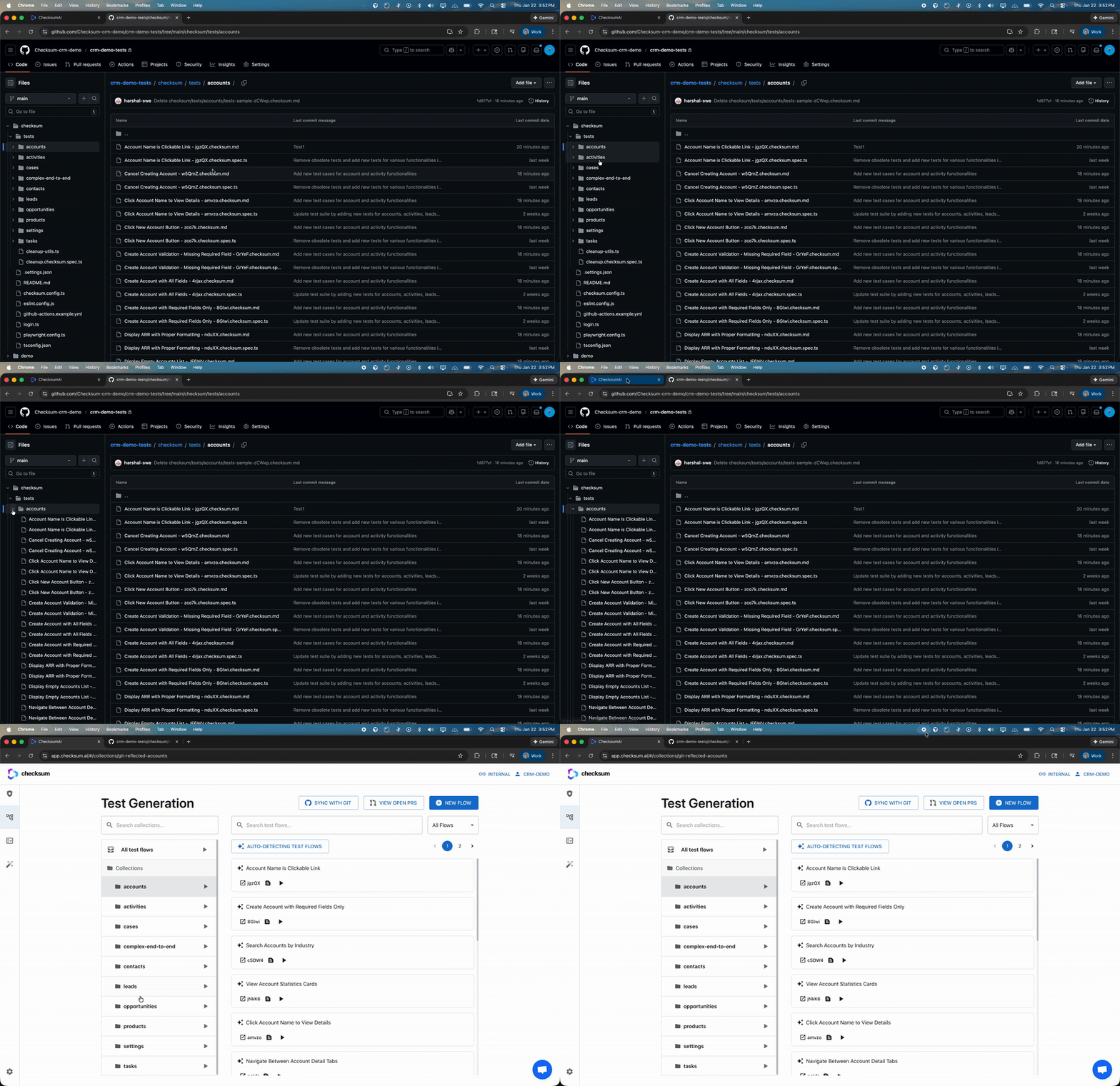
Repo Mirror solves this by keeping your GitHub repository and Checksum's UI bidirectionally synchronized. Code changes reflect in the UI. UI changes commit to your repo. No manual steps, no drift.
The Problem: Two Sources of Truth
Checksum provides tests as code—.spec files in your repository that integrate with your normal development workflow. But teams aren't uniform. Developers want to work in their IDE. QA engineers want dashboards and visual interfaces. Product managers want to define test requirements without touching Git.
Until now, that created a problem: the UI reads from a database, code lives in GitHub, and those are two separate systems. Make a change in the IDE, the UI doesn't know. Create a test in the UI, there's no commit history. The result is drift, duplication, and wasted time reconciling versions.
How Repo Mirror Works
Repo Mirror automatically syncs Checksum's database with your GitHub repository. Here's what happens:
Developer Workflow:
- Write tests as
.specfiles in thechecksum-testsdirectory - Push to GitHub like normal
- Changes appear in the Checksum UI automatically
QA Workflow:
- Create or edit tests in the Checksum UI
- Click "Save"
- Repo Mirror commits directly to your main branch (or opens a PR, depending on your configuration)
For Everyone:
- View open PRs directly in the UI
- Track which tests are pending review
- Download environment files and configuration
- Manual sync button available if needed
The sync is webhook-based. When you push to GitHub, Checksum receives the webhook and updates the UI. When you save in the UI, Checksum commits to your repository.
Why This Matters
1. Developers Stay in Their Flow
No context switching to a dashboard. Push code, run tests, review PRs—all in the tools you already use. Git history, blame, and CI integration work exactly as expected.
2. Non-Technical Teams Get Access
QA engineers and product managers can create and modify tests through the UI without learning Git commands or terminal workflows. The tests still live in your repository with full version control and review process.
3. Infrastructure for Autonomous Agents
Repo Mirror is the foundation that lets our AI agents work autonomously. Agents can push code to GitHub, and the UI updates automatically. No manual bookkeeping, no database reconciliation—just code.
This is why our agent performance improved significantly after deploying Repo Mirror. The agents are trained on code, not on Checksum-specific UI patterns. By letting them just write and push .spec files, we removed a major constraint.
Technical Details
- Sync mechanism: Webhook-based for GitHub → UI; commits trigger on UI → GitHub
- Branch strategy: Commits to main branch by default (configurable to open PRs)
- Required directory: Tests must be in the
checksum-testsdirectory - File format: Tests use .
checksum.specextension; metadata stored in .checksum.mdfiles - Manual override: "Sync with Git" button available if webhook delivery fails
What You Can Do With It
Environment Management: Download .env files directly from the UI. Edit environment variables in the dashboard, click save, and Repo Mirror commits the changes to your config file.
PR Tracking: View open PRs related to specific tests. See which tests are pending review before they merge.
Async Workflows: Generate tests overnight without keeping your local machine open. Our agents run on Checksum's servers, push code to GitHub, and open PRs for review in the morning.
Getting Started
Repo Mirror is available now for Checksum customers.
To enable it:
- Navigate to Settings in your Checksum account
- Enable Repo Mirror
- Connect your GitHub repository
- Configure sync preferences (direct commit vs PR-based workflow)
From that point forward, your repository and UI stay synchronized automatically.
Real-World Usage
Repo Mirror is already deployed and running in production. Customers are using it to:
- Enable non-technical team members to contribute test definitions
- Reduce onboarding friction for new engineers
- Run autonomous test generation workflows overnight
- Manage environment configuration through a clean UI instead of editing files locally
One customer recently generated over 100 tests using our AI agent in an overnight run. The agent detected coverage gaps, generated tests following their existing patterns (including a "bounded context" design pattern it identified in their codebase), and opened PRs for review. The entire workflow ran asynchronously because Repo Mirror handled all the commits and UI updates automatically.
What's Next
Repo Mirror is infrastructure. It's the foundation that enables:
- Web-based AI agents that work asynchronously
- IDE integrations that stay synchronized with dashboards
- Collaboration between technical and non-technical team members
- Test suites that are always a true reflection of your codebase
We're building toward a platform where anyone on your team can contribute to test coverage, where AI agents can work autonomously, and where your code is always the source of truth.
Questions? Reach out to us to learn more or enable Repo Mirror in your Checksum settings.