
Ship healthcare software fast. Keep incidents out of production.
Agent overview

End-to-End Agent

API Agent
The broken flow that gets you in real trouble
Health tech software has a vast surface area: from provider and patient portals to document and file handling and regulatory reporting. Those are complex, regulated flows that span clinical staff, administrative staff, and patients. And every release built with an AI coding tool touches more than one.
But teams are still verifying flows the way they did five years ago and bugs are creeping in.
59.5%
51.4%
A broken eligibility check reaches a patient. A missed regression in intake becomes a support escalation, then a trust problem with the practice or payer on the other end. User-facing bugs aren’t the only issue: there’s compliance drift after launch, changes that quietly put PHI somewhere it shouldn't be, and risk introduced through third-party integrations and vendors.
What changes with Checksum
Checksum delivers the AI testing capabilities that regulated industries need.
Automatically generated full-journey coverage
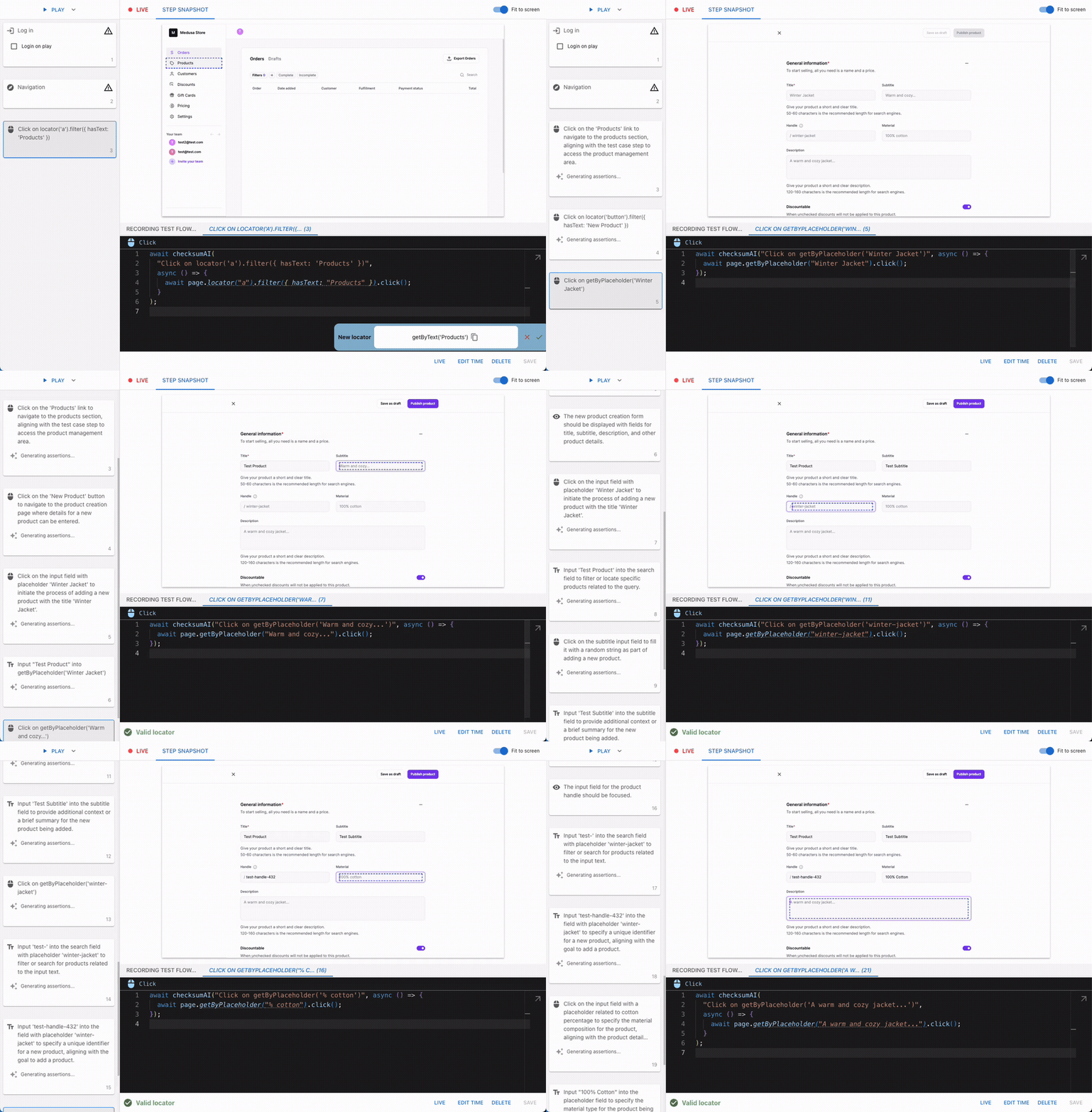
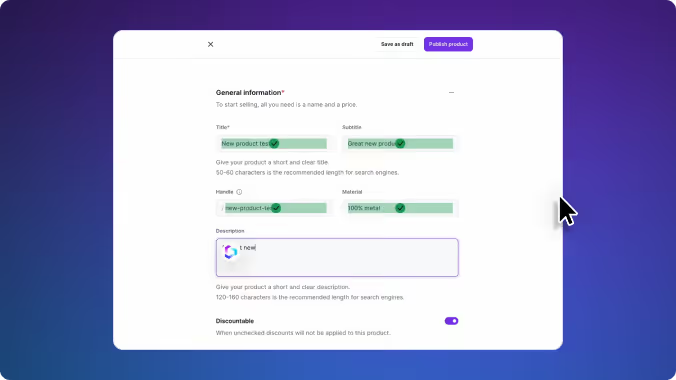
The E2E Agent maps your critical clinical and patient-facing flows, including multi-role workflows and document handling, and delivers tests as Playwright code in your repo. Across 1M+ production test runs, Checksum's median failure rate is 82% lower than manually maintained suites.

Auto-healing, not manual triage
When a test breaks because a flow changed, about 70% of failures resolve on their own through an auto-healing PR. Nobody needs to stop mid-sprint to chase a stale selector.
API-level verification
The API Agent generates journey-based tests directly from your OpenAPI, Postman, or GraphQL specs, so integration points like eligibility or claims APIs get covered without a hand-written test script.
How Checksum works
The agents run automatically in your existing CI pipeline (GitHub Actions, GitLab CI, Jenkins, CircleCI), so keeping coverage current doesn't require any manual action. Your code and tests stay inside your own infrastructure throughout.
Trusted to remove the maintenance burden

2026 QA Benchmark
82%
70%
82%
Frequently Asked Questions
Yes. Checksum is SOC 2 Type II and ISO 27001 certified, and a DPA is available. Your application code and the tests Checksum generates stay inside your own infrastructure throughout. This level of certification is typically sufficient to pass a health tech security review on its own.
Yes. Checksum can sign a BAA for customers who need one. Where possible, we recommend running Checksum against a lower environment (staging, QA, or dev) instead, so testing doesn't require PHI to flow through the system in the first place.
Not by default. Checksum is typically deployed against staging, QA, or dev environments rather than production, specifically to avoid touching PHI. For customers whose setup requires testing against an environment with PHI, Checksum can sign a BAA to cover that handling.
Tests live in a git repository you own. Checksum delivers every test as a pull request to your tests repository: standard Playwright or pytest code you are able to run, edit, or move.
It plugs into GitHub or GitLab and runs through your existing CI: GitHub Actions, GitLab CI, Jenkins, CircleCI, or GCP. Tests run automatically on every commit, PR, and deploy; nobody has to trigger anything manually.
The API Agent generates tests directly from your API spec (OpenAPI, Postman, GraphQL, or Protobuf), and auto-healing catches most breakages: roughly 70% resolve without engineer intervention, through a PR opened automatically.
Yes, that's the primary use case for the E2E Agent. It maps full user journeys across multiple steps and roles, not isolated screens, so a flow like intake-to-eligibility-to-scheduling is tested as one connected path.
Most health tech customers have tests running in their repository and in CI within the first week of signing. Before then, deals typically go through a rigorous approval process that includes BAA execution and vendor security review. Technical onboarding sees no more friction than any other industry.
A low-code platform that couldn't produce valuable tests is a common reason health tech teams hesitate to try another one. Checksum generates and delivers full test code, standard Playwright or pytest, as a pull request you review and own. There's no proprietary low-code format to outgrow, and auto-healing keeps tests current as your product changes rather than leaving them to go stale.
It's less about labor cost per hour and more about what you get for it: release velocity, how much time your team spends on flake triage, and how much confidence you actually have in coverage. Checksum runs in CI on every commit, PR, and deploy rather than on a QA team's schedule, and auto-healing resolves about 70% of failures without anyone manually chasing down a stale selector.
Stop spending time on test maintenance.
Ship faster, confidently with continuous verification on every change before it reaches a patient.