At a glance
Standard mode
Standard mode is faster and more direct. The agent goes straight to implementation without an extended planning phase.- Well-defined test flows with clear steps
- Straightforward applications
- When you want faster turnaround
- Iterating quickly on test coverage
Deep mode
Deep mode adds planning, knowledge-base analysis, and a more thorough review. The agent interviews you first, builds an understanding of your app, and then implements with that context.- Complex applications with nuanced workflows
- First-time test generation on a new app
- Flows that need a deep understanding of business logic
- When quality and coverage matter more than speed
Pipeline stages
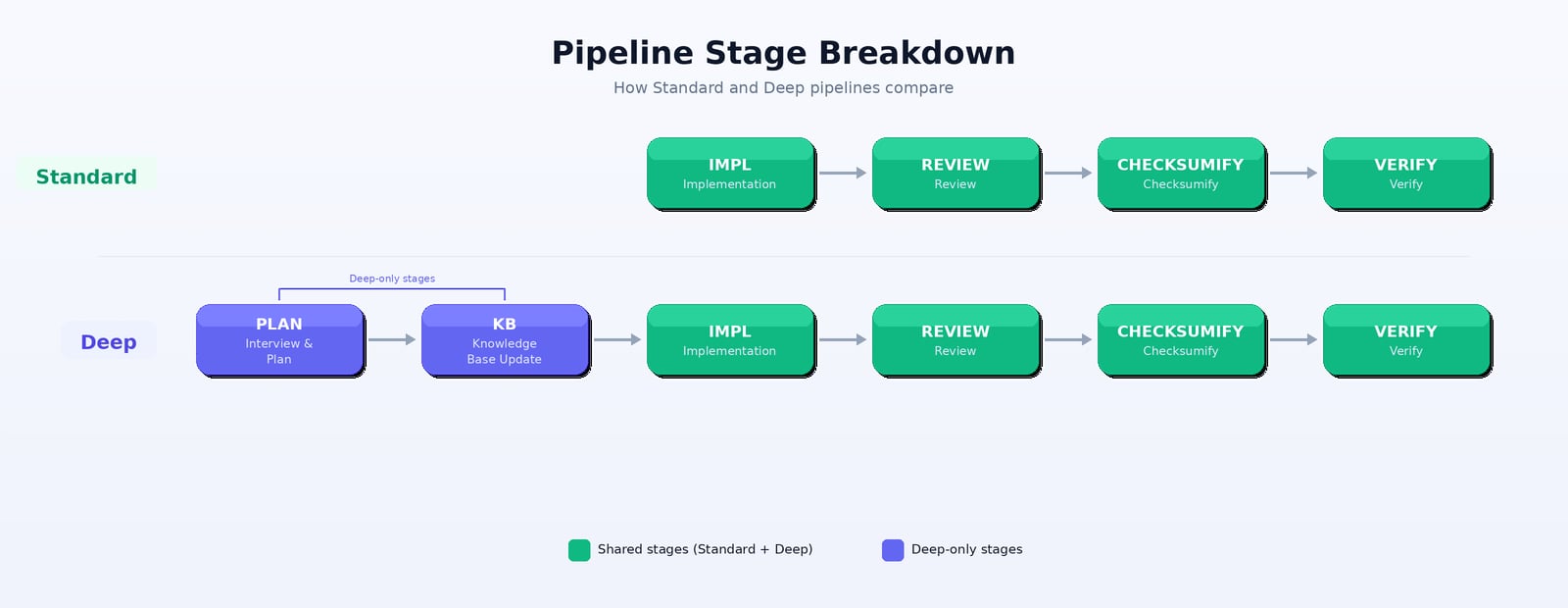
Standard skips the interview and knowledge-base stages.
Healing uses a different Standard pipelineStandard healing runs
Triage → Fix instead of the stages above. Deep healing uses the full Deep pipeline. See Auto-Healing.All pipeline variants
When to switch
Choosing a mode
You choose Standard or Deep when you start a detection or generation session from the web app. Standard is the default. From your coding agent, passdeepMode: true to the MCP detect, generate, or heal tools; your agent then approves the plan with checksum_session_approve (see Deep mode and the approval loop). To use Deep mode for sessions started from other triggers, such as pull requests, the REST API, Slack, or automatic healing, talk to your Checksum team.
Related
Agent Sessions
Interviews, approval gates, and statuses.
Generate Tests
Start a Standard or Deep generation.
Auto-Healing
Triage → Fix, or a Deep repair.